Deep Gluteal Syndrome: Symptoms and Treatment
Deep Gluteal Syndrome (DGS) is a condition involving irritation or entrapment of the sciatic nerve in the deep gluteal space outside the spine. It can cause deep buttock pain, tenderness, tingling, or pain radiating down the back of the thigh, often worsening with prolonged sitting or certain hip movements. Deep gluteal syndrome treatment in Bangalore depends on the underlying cause, severity of symptoms, and clinical findings. Treatment may include activity modification, targeted physiotherapy, medication when appropriate, and further interventions for persistent symptoms. Dr. Raghavendra Kembhavi can evaluate hip-related symptoms and help identify suitable treatment options based on individual needs.
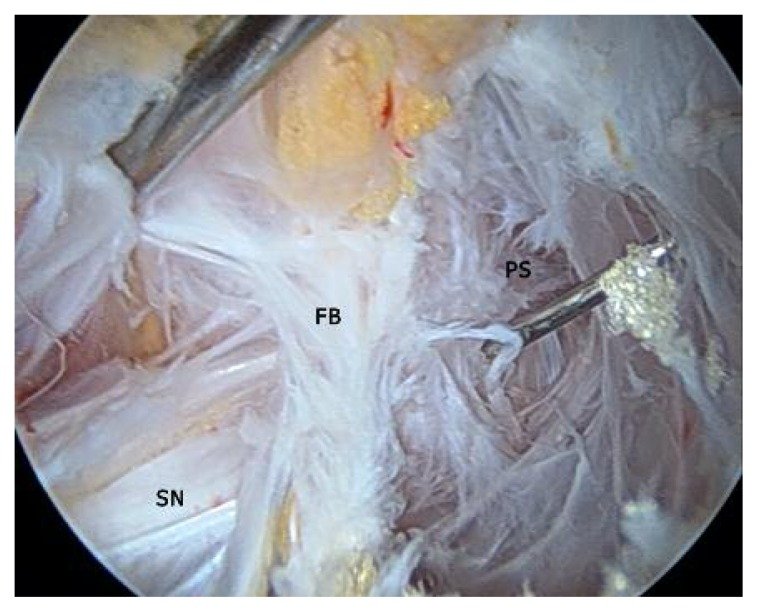
Common Causes of Deep Gluteal Syndrome
Fibrous bands around sciatic nerve with or without adhesions
Gemelli–obturator internus complex compression
Ischiofemoral impingement
Quadratus femoris-related compression
Proximal hamstring tendinopathy/avulsion
Scarring or compression around sciatic nerve
How Is Deep Gluteal Syndrome Diagnosed?
Is usually clinical to diagnose each and every conditions of DGS done by expert by doing various tests for each pathology.
Important examination points:
- Palpation over the deep gluteal space
- Seated piriformis stretch test
- Active piriformis test
- Freiberg-type provocation
- Pace-type test
- Hamstring examination
- Tests for ischiofemoral impigement
- Hip ROM and impingement tests
- Complete neurological examination
- Lumbar spine examination to exclude radiculopathy
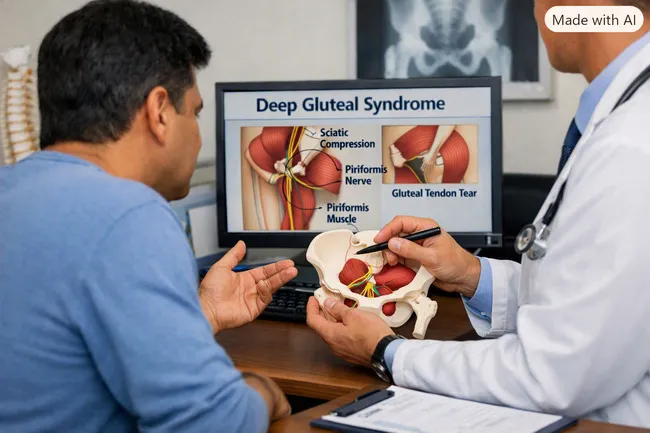
Imaging
MRI of the pelvis/hip is particularly useful for identifying the underlying cause and aids the clinical diagnosis.
Treatment algorithm
- Activity modification
- NSAIDs/analgesics when appropriate
- Targeted physiotherapy
- Stretching and strengthening of the hip abductors/external rotators
- Correction of biomechanical factors
If persistent
- Ultrasound-guided diagnostic/therapeutic injection directed at the suspected site of entrapment
- Consider hydrodissection in selected cases
Refractory cases
After failure of appropriate conservative treatment and confirmation of the compressive pathology, endoscopic sciatic nerve decompression needs to be done after confirming clinicoradilogically the place of sciatic nerve compression.
Dr Raghavendra Kembhavi has vast experience in diagnosing such complex rare pathologies of DGS and treating them accordingly .