Hip Synovitis Treatment in Bangalore for Pain and Stiffness
Your hip or knee feels swollen, warm, and stiff. It’s not the sharp pain of a sudden injury — it’s more of a constant, aching discomfort that makes even simple movements feel difficult. You’ve noticed the joint looks puffier than usual, and it’s become harder to bend or straighten fully.
Synovitis is inflammation of the synovial membrane, which lines a joint and helps produce lubricating fluid. When it affects the hip, it may cause pain, stiffness and difficulty moving the joint. Treatment depends on the underlying cause and severity of the inflammation. Dr. Raghavendra Kembhavi provides orthopaedic evaluation for hip conditions and discusses suitable treatment options based on the diagnosis. If you are looking for hip synovitis treatment in Bangalore, consult the clinic to understand the available care options.
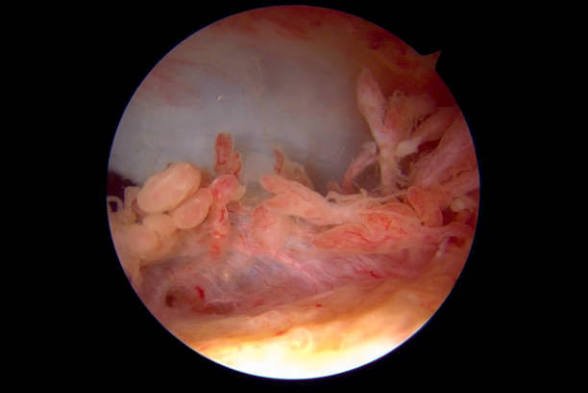
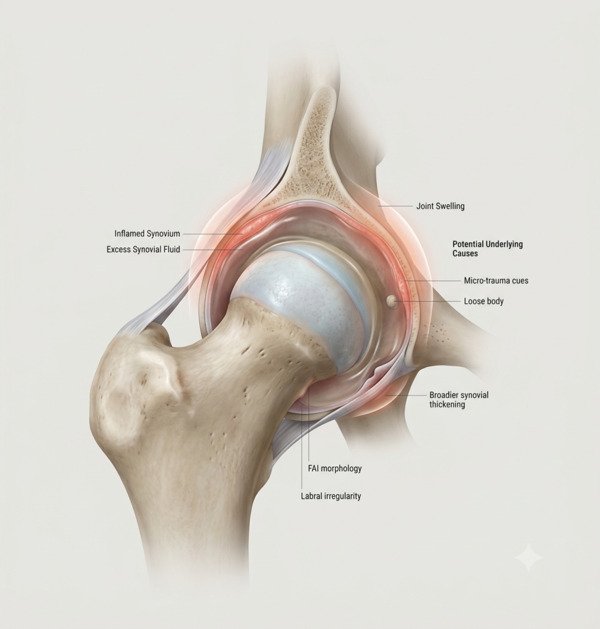
Think of the synovium as the joint’s internal lubrication system. It’s a thin membrane that lines the capsule of your joints and produces synovial fluid — the clear, egg-white-like substance that nourishes the cartilage and keeps the joint moving smoothly. When this lining becomes inflamed, it produces too much fluid, leading to the swelling, warmth, and stiffness that characterise synovitis.
There are many possible causes. In the hip, synovitis is often associated with mechanical problems like femoroacetabular impingement (FAI), labral tears, or loose bodies in the joint. It can also result from an acute injury, repetitive overuse, or an underlying inflammatory condition such as rheumatoid arthritis or gout. In some cases, the cause remains unclear — this is known as primary or idiopathic synovitis.
What’s important to understand is that synovitis is a signal. It’s your joint telling you something is wrong. Simply treating the swelling without investigating the underlying cause is like turning off a smoke alarm without checking for a fire. A thorough evaluation is essential to identify the source of the inflammation and address it properly.
Symptoms of Synovitis in the Hip Joint
Synovitis can develop gradually or come on suddenly after an injury. The symptoms often follow a pattern, but the severity varies from person to person. Common signs include:
Joint Swelling
Visible puffiness around the joint, caused by excess synovial fluid production. The area may feel warm to the touch.
Stiffness and Reduced Motion
The joint feels tight and doesn’t move as freely as it should. You may notice a loss of full range of motion.
Aching Pain
A dull, persistent ache that’s worse with activity and may improve with rest. The pain is often felt deep within the joint.
Warmth and Redness
The skin over the joint may feel warm and appear slightly reddened due to increased blood flow to the inflamed area.
Types of Synovitis
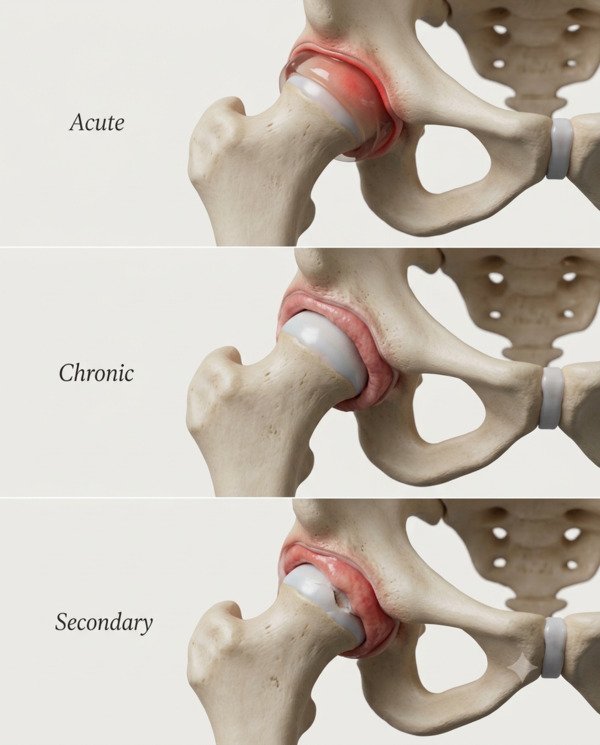
Synovitis isn’t a single condition — it’s a spectrum. Understanding which type you have is key to getting the right treatment. The main categories include:
Acute Synovitis
This develops suddenly, usually after a specific injury or episode of overuse. The joint becomes swollen and painful within hours to days. With appropriate rest and treatment, acute synovitis often resolves within a few weeks.
Chronic Synovitis
When inflammation persists for months, it’s considered chronic. This is often seen in conditions like rheumatoid arthritis, where the immune system mistakenly attacks the synovium. Chronic synovitis can cause progressive damage to the joint if not managed properly.
Secondary Synovitis
This occurs as a result of another underlying condition — such as a labral tear, FAI, loose bodies, or cartilage damage. The synovitis is a reaction to the mechanical irritation, and treating the underlying problem is essential to resolving it.
Diagnosis of Hip Synovitis
Because synovitis is often a sign of an underlying problem, the diagnostic process focuses on finding the root cause. Dr. Raghavendra Kembhavi begins with a detailed history — when did the symptoms start, what makes them better or worse, and is there any history of injury or inflammatory conditions? A physical examination assesses the joint for swelling, warmth, tenderness, and range of motion.
Imaging and Tests
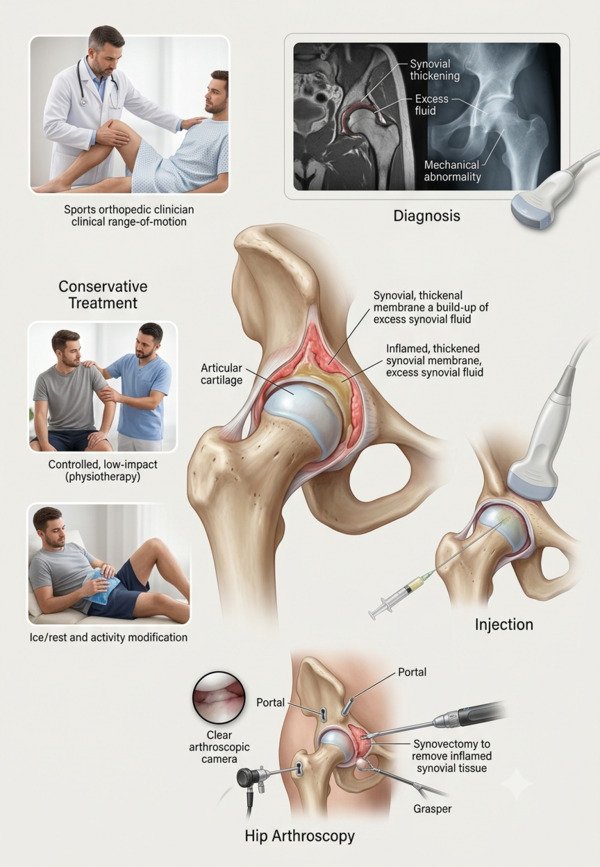
X-rays are usually the first step. While they don’t show synovitis directly, they can reveal signs of joint damage, loose bodies, or underlying conditions like arthritis or FAI. An MRI is more sensitive and can show thickening of the synovium, excess fluid, and any associated soft tissue damage. In some cases, ultrasound may be used to assess the degree of fluid and guide an injection. If an inflammatory condition is suspected, blood tests may be ordered to check for markers of inflammation or autoimmune disease.
Treatment Approach
The treatment of synovitis is tailored to the underlying cause. For acute cases related to overuse or mild injury, non-surgical measures are usually effective. This includes:
- Rest and activity modification — avoiding activities that aggravate the joint
- Anti-inflammatory medications — NSAIDs to reduce pain and swelling
- Ice and elevation — to help control acute swelling
- Physiotherapy — to maintain range of motion and strengthen surrounding muscles
If conservative measures don’t provide relief, a corticosteroid injection into the joint can be very effective at reducing inflammation quickly. This is often done under ultrasound or X-ray guidance to ensure accuracy.
When Surgery Is Needed
If synovitis is caused by a mechanical problem — such as a labral tear, FAI, or loose bodies — surgery may be necessary to address the root cause. Hip arthroscopy is a minimally invasive procedure that allows Dr. Kembhavi to remove the inflamed synovium (synovectomy), repair any structural damage, and remove loose fragments, all through small keyhole incisions. This not only resolves the synovitis but also prevents it from recurring by treating the underlying issue.
What to expect after surgery
Recovery from arthroscopic synovectomy is generally quicker than open surgery, but it still requires a structured rehabilitation programme. You’ll typically use crutches for the first one to two weeks to protect the joint while the initial inflammation settles.
Physical therapy begins almost immediately, focusing first on gentle range-of-motion exercises to prevent stiffness, then gradually progressing to strengthening and functional activities. Most people can return to desk work within 2 to 4 weeks, while a full return to sports or heavy manual work may take 3 to 6 months, depending on the extent of the surgery and your individual healing.

Why choose Dr. Raghavendra Kembhavi
A focus on joint preservation
Dr. Kembhavi’s approach is built around preserving your natural joint whenever possible. Rather than rushing to joint replacement, he explores every avenue to restore function and reduce pain through minimally invasive techniques.
Advanced arthroscopic skills
With fellowship training in arthroscopy and sports medicine, Dr. Kembhavi is experienced in the latest keyhole techniques for the hip, knee, and shoulder. This means smaller incisions, less pain, and faster recovery for his patients.
Personalised, patient-first care
Every patient is different, and so is every joint. Dr. Kembhavi takes the time to understand your specific situation — your goals, your lifestyle, and your concerns — and builds a treatment plan that’s tailored to you, not just your diagnosis.
Comprehensive diagnostic approach
Synovitis is often a symptom of something else. Dr. Kembhavi’s thorough diagnostic process ensures that the underlying cause is identified and addressed, not just the surface-level inflammation.