Non-Surgical Hip Treatment in Bangalore for Hip Pain Relief
Hip pain can affect walking, movement and everyday activities. Non-surgical hip treatment may be suitable for certain conditions, depending on the cause and severity of symptoms. Dr. Raghavendra Kembhavi provides orthopaedic evaluation to help patients understand their condition and explore appropriate treatment options. If you are looking for non-surgical hip treatment in Bangalore, consult the clinic to discuss a treatment plan tailored to your needs.
What is non-surgical hip treatment?
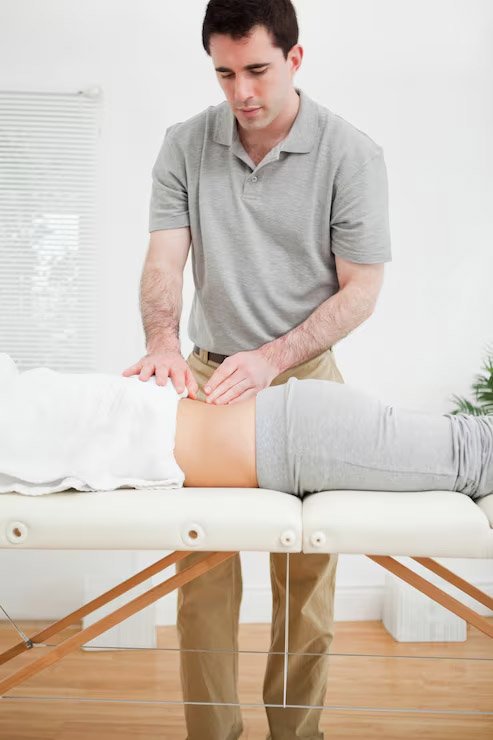
Non-surgical hip treatment is a staged, structured program rather than a single fix. It starts with an accurate diagnosis — clinical examination supported by imaging — followed by activity modification, a targeted physiotherapy program, and medication where needed to control pain and inflammation.
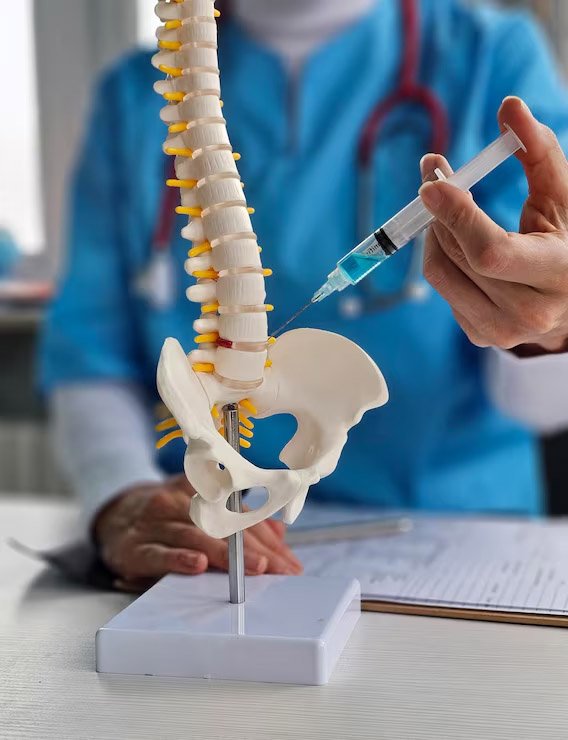
Where physiotherapy and medication alone aren’t enough, image-guided injection therapies extend what conservative care can achieve: corticosteroid injections for acute inflammation, viscosupplementation to improve joint lubrication in early arthritis, and PRP (platelet-rich plasma) to support tendon and cartilage healing. Surgery is discussed only if this pathway doesn’t deliver adequate relief.
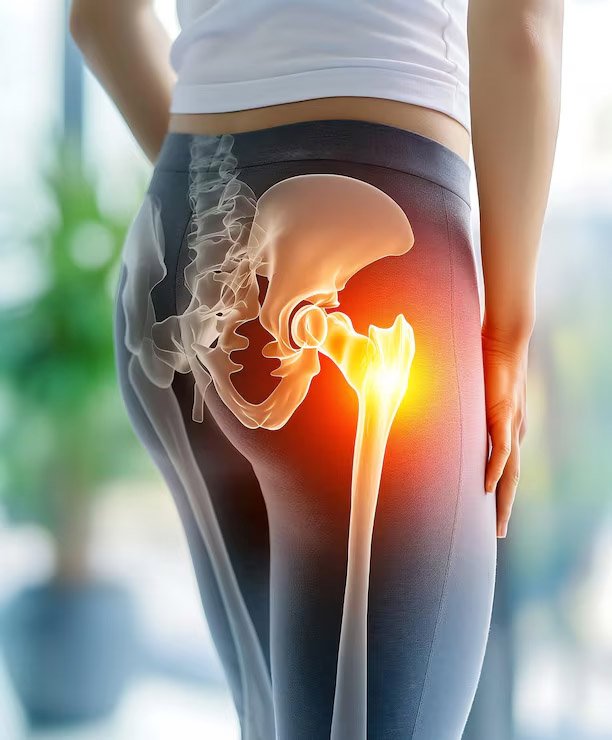
The hip is a ball-and-socket joint. In a healthy hip, smooth cartilage cushions the ball (femoral head) and socket (acetabulum), allowing fluid, pain-free movement. When this cartilage wears away due to arthritis, injury or disease, bone grinds against bone — causing severe pain, stiffness and dramatically reduced quality of life. When conservative treatments such as physiotherapy, medications and injections no longer provide adequate relief, hip replacement surgery offers a highly effective, long-lasting solution.
Hip conditions managed without surgery
Dr. Raghavendra Kembhavi matches treatment to the cause and severity of your hip condition, always starting with the least invasive option likely to work.
Early & Moderate Osteoarthritis
Cartilage wear causing stiffness and activity-related pain, managed with physiotherapy, weight management and joint-preserving strategies.
Trochanteric Bursitis
Inflammation of the fluid-filled sac over the hip’s outer bone, causing pain when lying on the side or climbing stairs.
Gluteal & Hip Flexor Tendinopathy
Overuse-related tendon irritation from running, cycling or repetitive activity, responding well to targeted rehab.
Mild Femoroacetabular Impingement
Early-stage impingement without significant labral damage, often manageable with activity modification and physiotherapy.
Muscle Strains & Sports Overuse
Groin, hip flexor and adductor strains common in athletes, treated with structured rehabilitation and graded return to sport.
Piriformis Syndrome
Deep gluteal muscle tightness irritating the sciatic nerve, causing pain radiating into the buttock and leg.

Is non-surgical treatment right for you?
These signs suggest conservative care is a strong starting point for your hip pain.
- Hip pain that comes and goes with activity, rather than being constant
- No locking, catching or true instability in the joint
- You haven’t yet tried a structured physiotherapy program
- Imaging shows early arthritis, bursitis or tendinopathy rather than a major tear
- Pain is manageable with rest, ice or over-the-counter medication
- You’re able and willing to commit to a rehab program
- Symptoms started recently or are related to a specific activity
- You want to avoid or delay surgery if a good alternative exists
How non-surgical hip treatment is structured
Assessment & Imaging
Clinical examination plus X-ray or MRI to confirm the diagnosis and rule out conditions needing earlier intervention.
Activity Modification
Adjusting load, posture and movement patterns to reduce irritation while healing begins.
Physiotherapy & Rehab
A targeted strengthening and mobility program built around your specific hip condition.
Medication or Injection
Oral anti-inflammatories, or image-guided corticosteroid, PRP or viscosupplementation where indicated.
Review
Scheduled follow-up to track improvement against your baseline symptoms and function.
Progress or Adjust
The plan continues, is stepped up, or — rarely — surgical options are discussed if progress stalls.
Who benefits most from non-surgical hip treatment
Good candidates typically have:
- Hip pain from bursitis, tendinopathy or early-to-moderate arthritis
- No significant mechanical locking, catching or instability
- Symptoms that haven’t yet had a structured treatment trial
- Imaging without major labral tear or advanced joint space loss
- Willingness to commit to a physiotherapy program
Surgery may be needed when:
- Pain persists despite a full, well-followed conservative program
- Imaging confirms a labral tear or significant structural damage
- Mechanical symptoms — locking, catching, instability — limit function
- Advanced osteoarthritis with substantial joint space loss is present
Non-surgical treatment vs. surgical treatment
| Factor | Non-Surgical Treatment | Surgical Treatment |
|---|---|---|
| Recovery time | None — activities continue through treatment | Weeks to months, condition-dependent |
| Risk profile | Low — no anaesthesia or incision | Standard surgical and anaesthesia risks |
| Typical timeline to relief | 6–8 weeks for most conditions | 3–4 months for full recovery |
| Best suited for | Arthritis, bursitis, tendinopathy, mild impingement | Labral tears, advanced arthritis, structural deformity |
| Cost & time commitment | Lower upfront, ongoing physiotherapy sessions | Higher upfront, defined rehab program |
Limitations & considerations
Non-surgical treatment is low-risk, but it’s worth understanding where it has boundaries.
Won’t Repair Structural Tears
A torn labrum or significant cartilage damage needs surgical repair — physiotherapy manages symptoms, not the tear itself.
Requires Consistency
Results depend on following through with physiotherapy and activity changes, not a single visit.
Injection Frequency Limits
Corticosteroid injections are limited to a few times a year in the same joint to protect surrounding tissue.
Progressive Conditions
Advanced arthritis may continue to progress despite conservative care, eventually needing surgical review.
Variable Response
Response to PRP and viscosupplementation varies between patients and isn’t guaranteed for every case.
Ongoing Monitoring Needed
Periodic review ensures the plan is adjusted promptly if symptoms change or worsen.
A detailed non-surgical recovery timeline
Progress is reviewed at each stage, and the plan is adjusted based on your response.
Week 1–2: Getting Started
Activity modification begins immediately; pain and inflammation control with medication if needed; physiotherapy assessment completed.
Week 2–4: Building the Program
Structured physiotherapy underway; early gains in mobility and reduced day-to-day pain; injection therapy considered if indicated.
Week 4–6: Injection Therapy (If Needed)
Corticosteroid, PRP or viscosupplementation administered where physiotherapy alone hasn’t fully resolved symptoms.
Week 6–8: Progressive Strengthening
Strength and function continue to improve; most patients notice meaningful relief by this stage.
Week 8–12: Review & Consolidation
Formal review of progress against baseline; plan is continued, tapered, or stepped up depending on response.
3–6 Months: Long-Term Maintenance
For chronic conditions like osteoarthritis, an ongoing maintenance program of exercise and periodic review supports lasting results.
Fellowship-trained, sports medicine focused
Dr. Raghavendra Kembhavi is a fellowship-trained Orthopaedic Surgeon and Sports Medicine Specialist offering minimally invasive arthroscopic care for hip, knee and shoulder conditions in Bangalore.

10000+
Successful Patient Consultations

3000+
Orthopaedic & Sports Injury Treatments

2500+
Arthroscopic & Joint Procedures

17+
Years of Trusted Experience