Snapping Scapula Syndrome Treatment in Bangalore
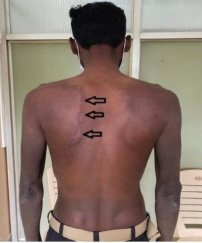
A clicking, grinding, or snapping sensation around your shoulder blade every time you move your arm. It may be painless at first, but over time it becomes a nagging ache — sometimes sharp enough to stop you mid-movement. This is snapping scapula syndrome, a condition where the shoulder blade rubs abnormally against the rib cage beneath it.
It’s an under-recognised cause of shoulder pain that’s often dismissed as a muscle strain or poor posture. But for people who live with it, the constant snapping and discomfort can be genuinely limiting. At our clinic in Bangalore, Dr. Raghavendra Kembhavi takes a careful approach to diagnosing this condition and offers treatment options ranging from targeted physiotherapy to arthroscopic surgery for cases that don’t respond.
What causes snapping scapula syndrome?
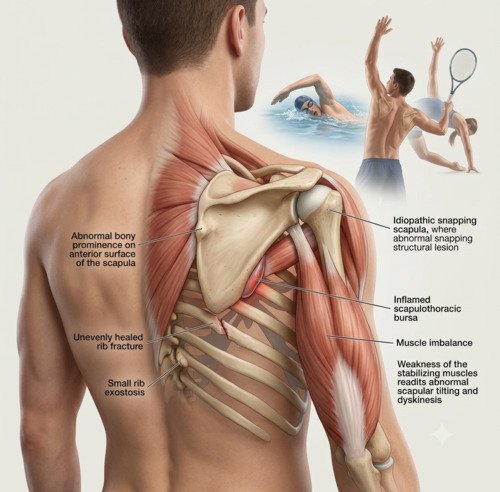
The scapula (shoulder blade) glides over the rib cage when you move your arm. In snapping scapula syndrome, something disrupts this smooth gliding, causing the scapula to catch, click, or grind against the ribs beneath it. The sound is often audible to others, not just felt by you.
Causes fall into two main groups. Bony causes include an abnormal bony prominence on the scapula, a rib fracture that healed unevenly, or a rib exostosis. Soft tissue causes include muscle imbalance, bursitis between the scapula and ribs, or weakness of the stabilising muscles that allow the scapula to tilt abnormally. In many cases, no specific cause is identified — this is called idiopathic snapping scapula.
It’s more common in people who do repetitive overhead activities, those with poor posture, and athletes in sports like swimming, tennis, and gymnastics.
Signs and symptoms
The hallmark of snapping scapula syndrome is a mechanical sensation around the shoulder blade. But the condition can cause more than just noise.
Audible or palpable snapping
A clicking, grinding, or snapping sound or sensation around the shoulder blade when you move your arm.
Pain along the inner scapula
A dull ache or sharp pain along the inner border of the shoulder blade, often worse with overhead activity.
Pain with arm movement
Discomfort when reaching, lifting, or rotating the arm. Symptoms may lessen with rest.
Muscle fatigue and weakness
The stabilising muscles around the scapula tire quickly, contributing to poor shoulder mechanics over time.
Diagnosis
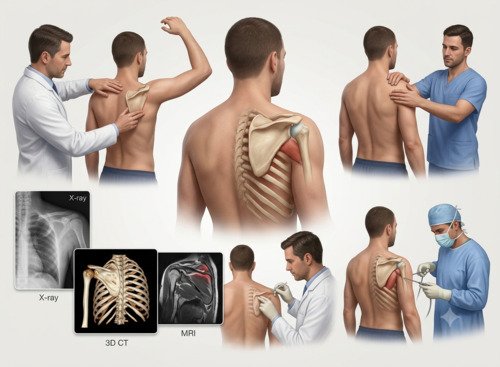
Diagnosis is primarily clinical. Dr. Kembhavi will ask you to reproduce the snapping by moving your arm in specific ways — this often reveals the location and nature of the problem. Palpation along the scapula can identify areas of tenderness or crepitus.
Imaging and tests
X-rays can identify bony causes like an abnormal scapular prominence or rib deformity. A CT scan with 3D reconstruction is particularly useful for visualising bony anatomy and planning surgical treatment. An MRI is helpful for assessing soft tissue causes like bursitis or muscle atrophy. In some cases, a diagnostic injection of local anaesthetic into the bursa can confirm the source of pain.
Treatment approach
Most cases of snapping scapula syndrome respond well to non-surgical treatment. The focus is on physiotherapy to correct muscle imbalances and improve scapular control, along with activity modification and anti-inflammatory medications. When symptoms persist despite appropriate conservative care, or when there’s a clear bony cause, arthroscopic surgery may be recommended to remove the offending bony prominence or bursa.
How snapping scapula syndrome is treated
Step 1
Activity Modification
Avoiding the specific movements that reproduce the snapping and aggravate the symptoms.
Step 2
Physiotherapy
The cornerstone of treatment. Strengthening the scapular stabilisers, correcting posture, and restoring normal shoulder mechanics.
Step 3
Injection (If Needed)
An image-guided corticosteroid injection into the scapulothoracic bursa can provide relief and confirm the diagnosis.
Step 4
Arthroscopic Surgery
Keyhole surgery to remove the bony prominence, bursa, or other source of impingement between the scapula and rib cage.
Step 5
Supervised Rehabilitation
A structured programme to restore shoulder mechanics and prevent recurrence through targeted strengthening.
Step 6
Return to Activity
Gradual return to overhead activity and sport, guided by strength and symptom resolution.
Arthroscopic surgery vs. conservative treatment
| Factor | Arthroscopic Surgery | Conservative Treatment |
|---|---|---|
| Best for | Clear bony cause, failed 6+ months of physiotherapy | First-line for all patients; most cases respond |
| Pain relief | Direct removal of the impinging structure | Gradual; symptoms improve over weeks to months |
| Recovery time | Sling 2–4 weeks; full recovery 3–6 months | No downtime; 6–12 weeks of guided therapy |
| Recurrence risk | Low when the underlying cause is removed | May recur if muscle imbalances aren’t corrected |
Why choose Dr. Raghavendra Kembhavi
Experience with complex scapular conditions
Snapping scapula syndrome is often missed or dismissed. Dr. Kembhavi’s detailed assessment — including CT 3D imaging when needed — helps identify the exact source of the problem, whether it’s bony or soft tissue.
Arthroscopic expertise
When surgery is needed, Dr. Kembhavi performs arthroscopic scapulothoracic procedures through small keyhole incisions. This allows precise removal of the offending structure with less trauma and faster recovery than open surgery.
A focus on physiotherapy first
Most cases of snapping scapula respond to targeted physiotherapy and postural correction. Dr. Kembhavi emphasises conservative care before considering surgery, reserving intervention for cases that genuinely need it.
Comprehensive assessment
Not all snapping scapula is the same. Dr. Kembhavi distinguishes between bony and soft tissue causes, as each requires a different treatment approach — ensuring you get the right care for your specific problem.
Recovery timeline after arthroscopic surgery
Recovery is generally quicker than other shoulder procedures because the surgery addresses the mechanical source directly.
Week 0–2
Sling for comfort only. Gentle range-of-motion exercises begin almost immediately. Ice to control swelling.
Week 2–6
Sling discontinued. Active range of motion and light daily activities resume. Physiotherapy continues.
Week 6–12
Progressive strengthening begins. Return to light overhead activity guided by comfort and strength.
Month 3–6
Full return to overhead activity and sport. Ongoing strengthening to maintain shoulder mechanics.